Cline & Co
A studio is not measured by its square footage. It is measured by what it makes possible — the quality of concentration it allows, the ease of collaboration it encourages, the feeling, at the end of a long day, that the room was working with you. Cline & Co needed a space that matched the standard of the work produced inside it.


Introduction
Cline & Co is a brand design studio of eight people based in Grünerløkka, Oslo. They had occupied the same first-floor unit for six years — a space that had served them well in the early years and had since stopped keeping pace with the practice.
The brief was not about size. The footprint was staying the same. What they wanted was a considered reconfiguration of what they already had — better light, a clearer distinction between focused work and collaborative space, and an environment that reflected the quality of the studio's output in a way the existing fit-out did not.
They came to us having already decided what they did not want: anything that looked designed for effect. No feature walls. No statement lighting. A space that would feel, to a new client walking in for the first time, quietly confident rather than loudly considered.
Lead Architect
Astrid Holm
Year Completed
2026
Floor Area
140
Type
Commercial


The Problem
The unit faced east and north — good for consistent light, difficult for warmth. The existing layout concentrated workstations along the east wall, leaving the north end of the studio — the largest and most open section — used primarily for storage and overflow. The natural light that made the space worth keeping was being managed rather than used.
A secondary issue was acoustic. Eight people in a single open-plan room, without any separation between focused and collaborative work, had produced a studio culture of headphones and closed conversation. The clients were direct about this: the space was making it harder to work together.
The existing fit-out had been installed by the previous occupant — a legal firm — and had not been substantially altered. Drop ceilings, partition walls, and a kitchen positioned at the east end that blocked the morning light entirely. Stripping it back was not a question of budget but of nerve: the bones of the space, once exposed, would either justify the decision or they wouldn't.
They did.

The Problem
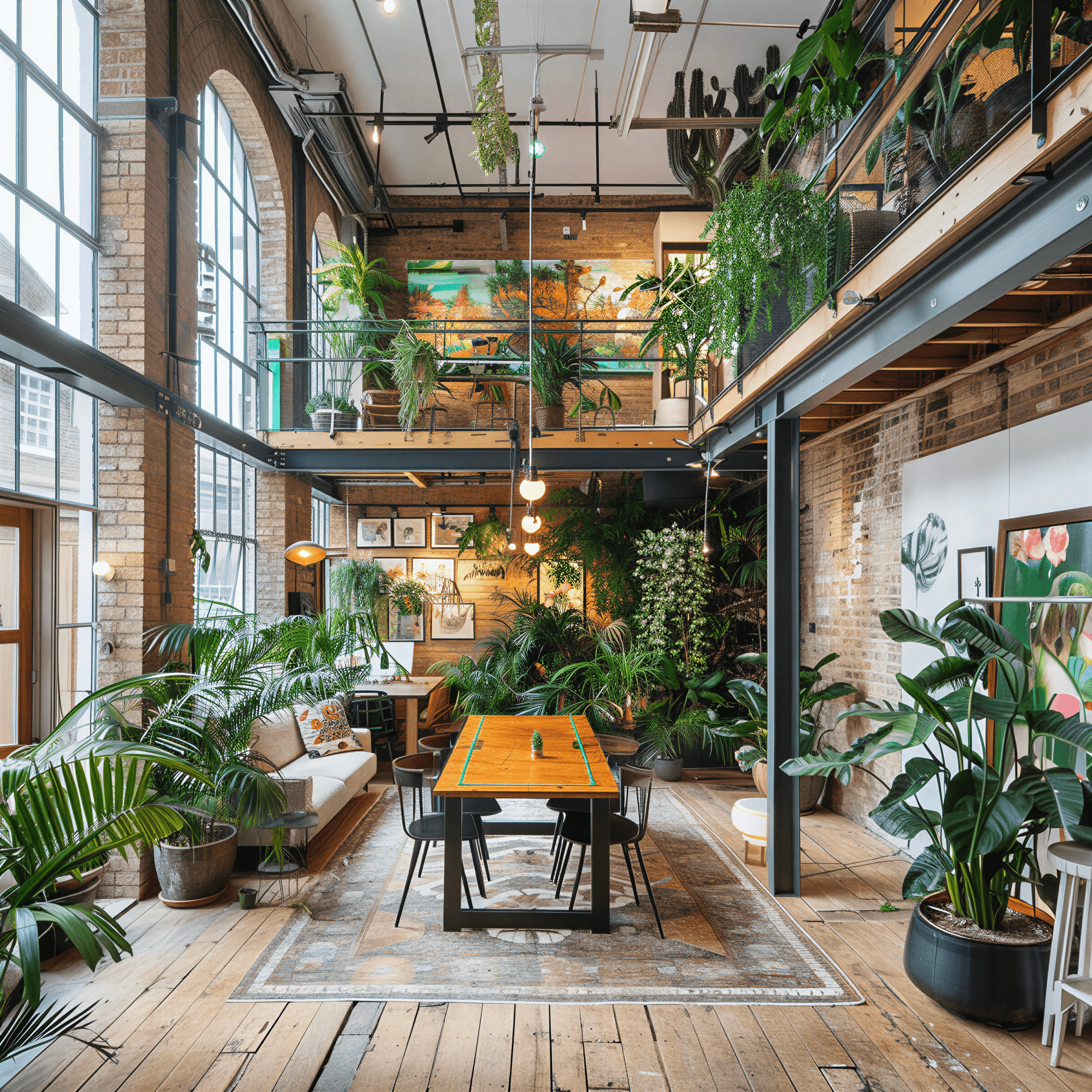
The drop ceiling came out first. Above it: original concrete soffit, exposed ductwork in painted steel, and an additional 600 millimetres of height that changed the character of the room entirely. The kitchen moved to the north wall. The east elevation — now unobstructed — became the primary workstation run, eight desks in a single line facing the morning light.
The collaborative zone occupies the centre of the studio: a long table, loose seating, a pinboard wall that runs the full width of the north end. It is separated from the workstations not by partition but by planting — a considered arrangement of larger specimens that absorbs sound, defines territory, and makes the transition between modes of work legible without making it rigid.
The pendant lights are original to the building — industrial enamel shades, rewired. The floor is the original timber, sanded and sealed. Nothing was added that the space did not ask for.
We asked for a space that felt like us. What Thresholld delivered was a studio that makes us better at what we do — more focused, more collaborative, and considerably more willing to come in on a Monday morning."
Maren Solberg — Ingrid Voss — Frida Lund