Still Water
A home for an artist is not a house with a studio attached. It is a single proposition — a place where living and making occupy the same air, where the work on the wall is not decoration but evidence, and where the quality of the light is not a preference but a professional requirement.


Introduction
The client was a painter with an established exhibition record and a clear sense of what she needed — she had simply never had the space to realise it. She had been working from a converted bedroom in her Frogner apartment for nine years. The work had outgrown the room. The room had outgrown the building.
The site was a new-build plot on the eastern edge of Nordberg — elevated, south-facing, with uninterrupted views across the tree line toward the fjord. The brief was written in two parts. The first concerned the studio: north light, height, a concrete floor, separation from the living spaces without disconnection from them. The second concerned the home: warm, unhurried, a place to live well in the hours when she was not working.
The two parts were not in tension. Resolving them was the project.
Lead Architect
Daniel Weir
Year Completed
2026
Floor Area
800 m²
Type
Private Residence


The Problem
A live-work home fails in one of two ways. The studio dominates and the home disappears — the occupant is always at work, never quite off. Or the home dominates and the studio becomes a room the artist apologises for, a concession to practicality that never quite earns its place.
The planning envelope on the Nordberg plot was generous in footprint but constrained in section — a two-storey maximum with a shallow pitch restriction that limited the volume available for the upper floor. Achieving the ceiling height the studio required meant resolving the section in a way that satisfied both the planning authority and the structural logic of the building.
The orientation presented a secondary challenge. A south-facing plot in Oslo is a significant asset for a home and a liability for a working artist — direct sun on a painting surface at the wrong time of day is not a minor inconvenience. The studio had to be positioned and glazed independently of the domestic spaces, despite sharing the same envelope.

The Problem
The studio occupies the full northern section of the ground floor — a double-height volume achieved by removing the upper floor in that section entirely and replacing it with a rooflight running the length of the north wall. The light is consistent, diffuse, and exactly what the brief required.
The living spaces occupy the south-facing ground floor and the entire upper level — bedroom, reading room, a kitchen that opens onto a terrace above the tree line. The two zones connect through a single transitional space at the centre of the plan: a room with no designated use that the client now uses for everything.
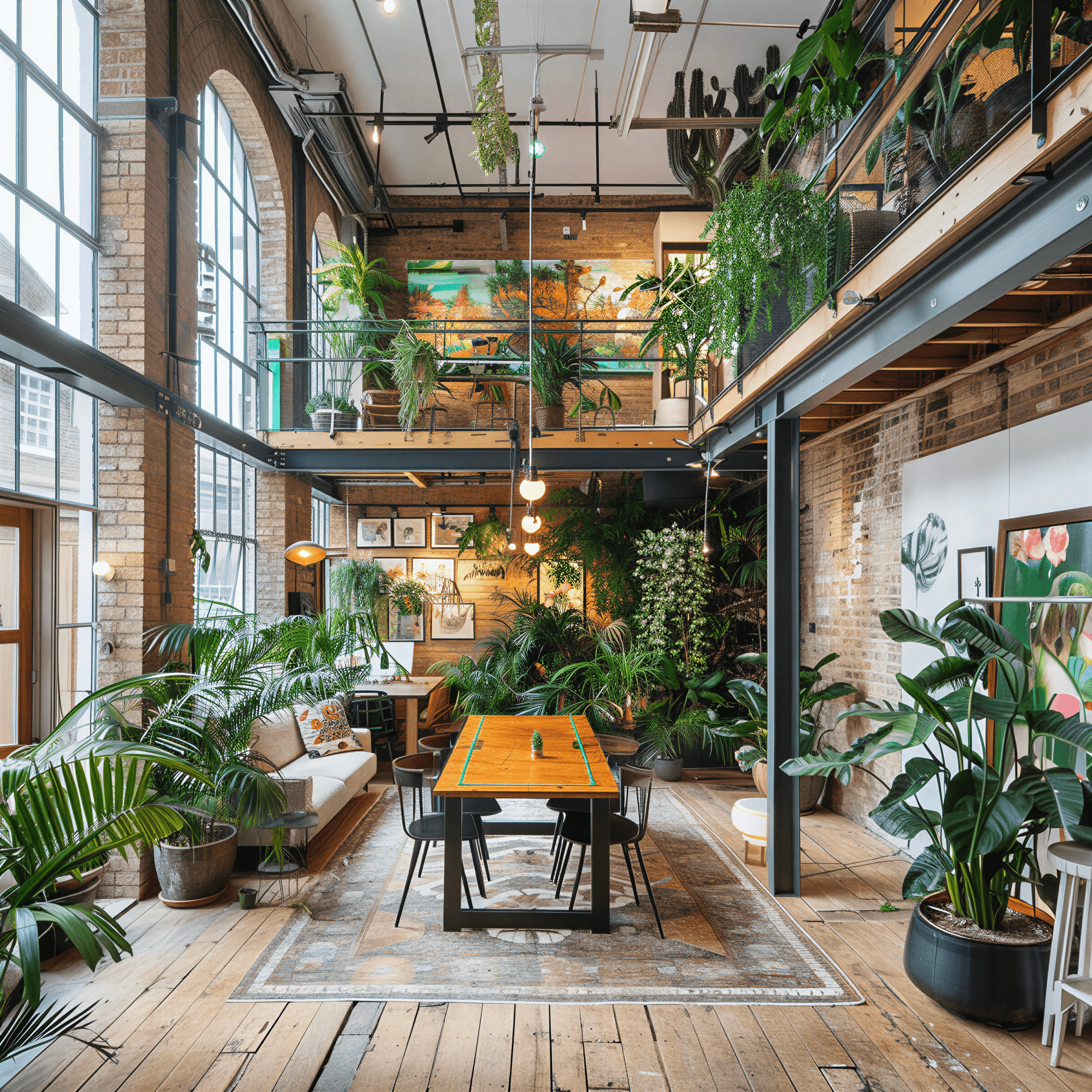
The paintings hang throughout the home, not only in the studio. Works in progress on the north wall. Finished pieces in the living room, the stairwell, the bedroom. The house does not perform as a gallery. It lives as one — quietly, and without announcement.
I had described what I needed to three architects before Thresholld. They were the first practice that understood that the studio and the home were the same question. The house they built answers both
Ingrid Moe, painter, Oslo