Longhouse
A working studio is not an office. It is a place where the quality of the light determines the quality of the thinking — where the ceiling height, the direction of the windows, and the acoustic weight of the room are not amenities but professional requirements. A gallery is not a white cube. It is a room that holds work and holds people looking at work, and the two demands are not always the same demand.
Longhouse asked for both. In the same building. Without a seam between them.


Introduction
The building is a Victorian printworks in Hackney Wick, built in 1887 and used continuously for light industrial work until 2019. When the client — a painter who had been renting studio space across four different buildings for eleven years — first saw it, the roof was partially open to the sky and the floor was covered in decades of press ink and aggregate. The arched brick end wall and the pine floor beneath the debris were intact. The steel trusses, original to the building, were sound.
The brief was short: do not improve it. Reveal what it already is. Make it possible to paint here, to show work here, and to spend a working day here without wanting to be somewhere else.
Lead Architect
Oliver Marsh
Year Completed
2045
Floor Area
340 m²
Type
Commercial

The Problem
The arched windows on the north-facing end wall gave the studio the light a painter requires — diffuse, consistent, without direct sun. But the volume, undivided, was too large for concentrated work and too acoustically live for the quiet the client described as the actual work.
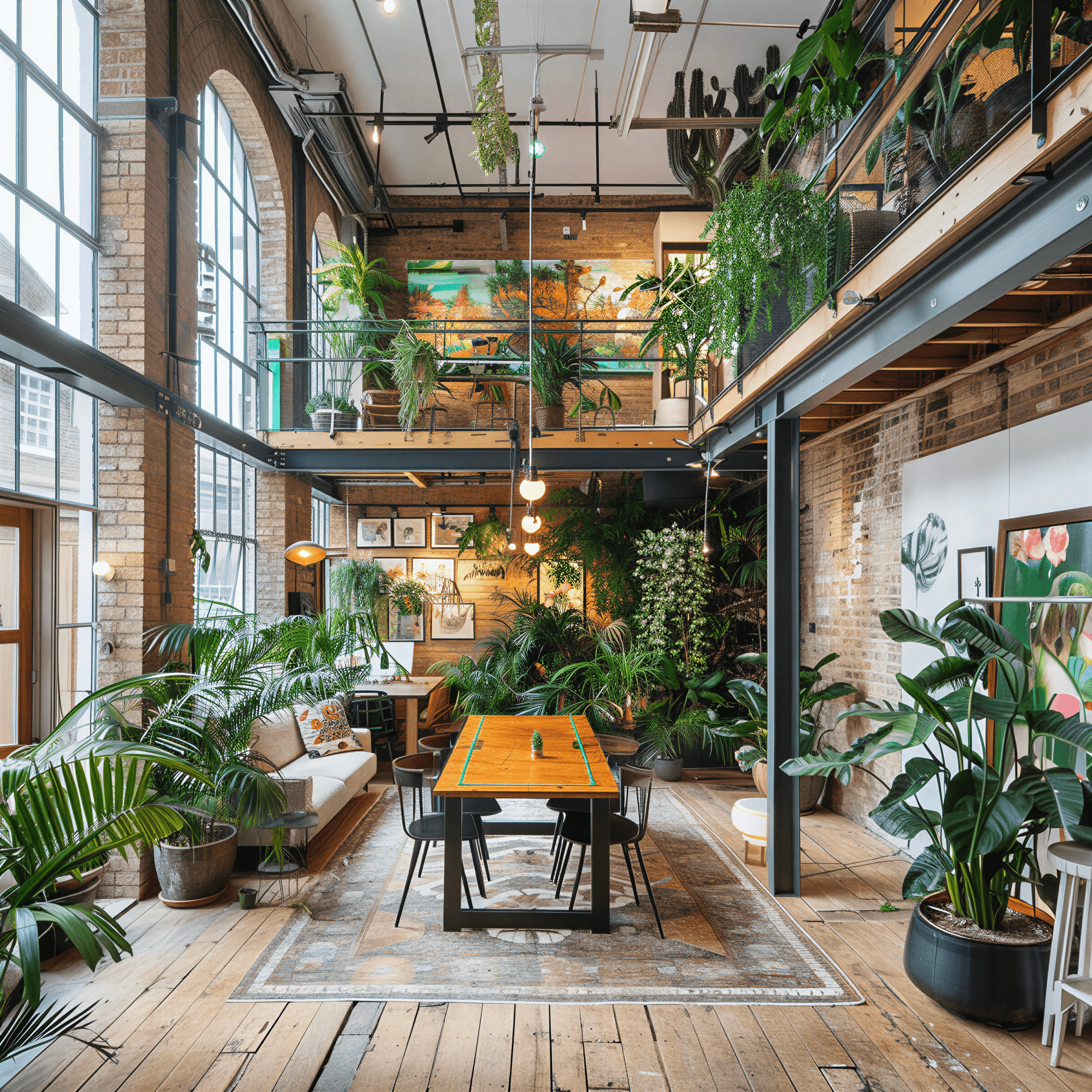
The mezzanine resolved both. A black steel deck inserted at mid-height divides the volume without closing it — the ground floor remains open to the full pitch of the trusses, the arched windows unobstructed, the upper level a second working zone within the same light. The steel specification matched the original truss section as closely as the structural requirement allowed.

The Work
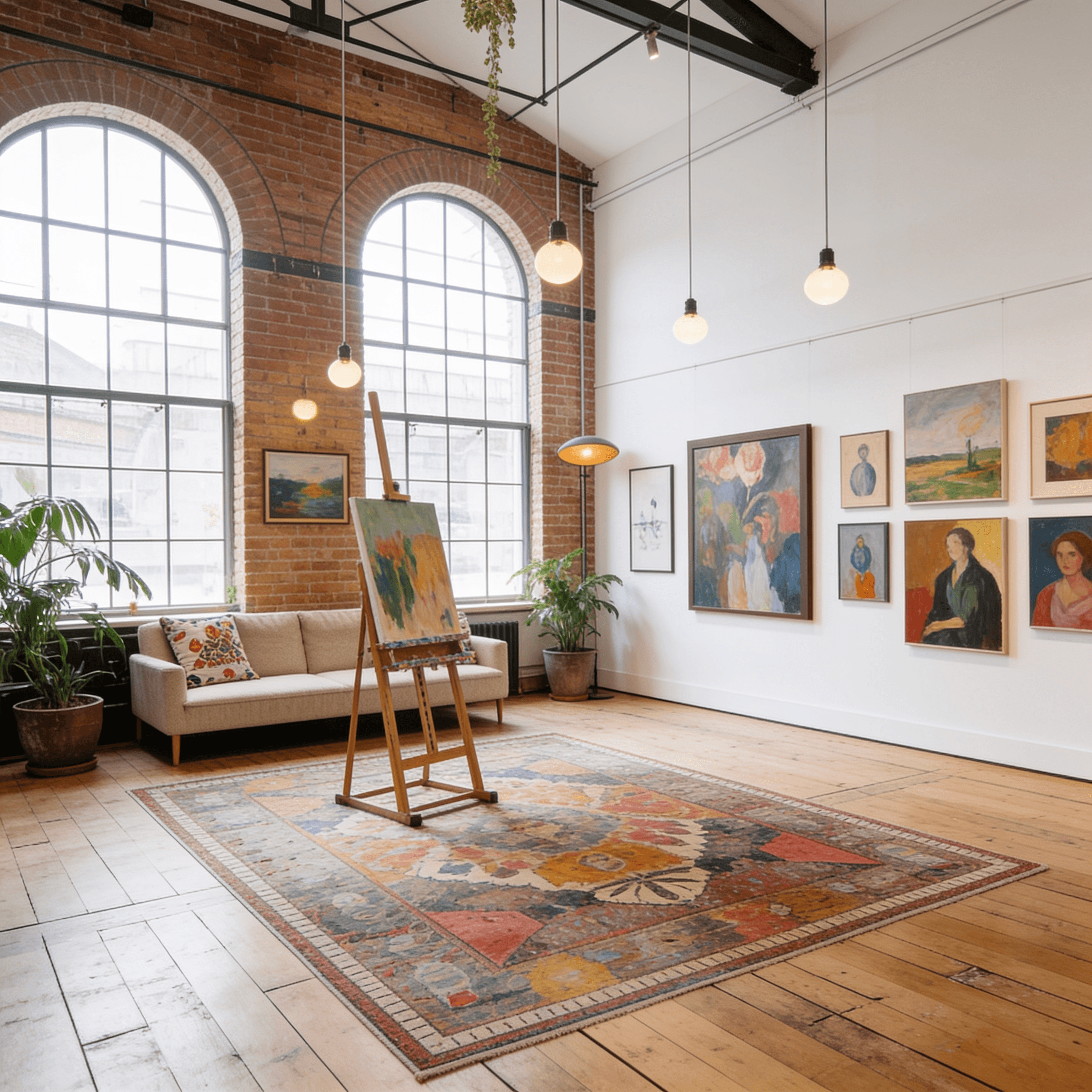
The floor was cleaned, not replaced. Three passes of aggregate removal brought the original pine boards back to a condition that retained the evidence of the building's previous life without carrying the contamination of it. The walls were treated the same way — brick left as found where it was found, white-painted above where render had failed and been removed. The line between the two is visible and deliberate.
The south wall carries a flush fixed hanging system, concealed within the plaster, capable of carrying any weight the client needs. Everything else — the table, the easel, the sofa, the paintings leaned and stacked — arrived with the client and found its place.
"I had been making work in rented rooms for over a decade. I knew what I needed but had never been able to describe it to anyone who could build it. Oliver understood without being told. The building we have now is the one the original building was always trying to be."
The Client, Hackney Wick